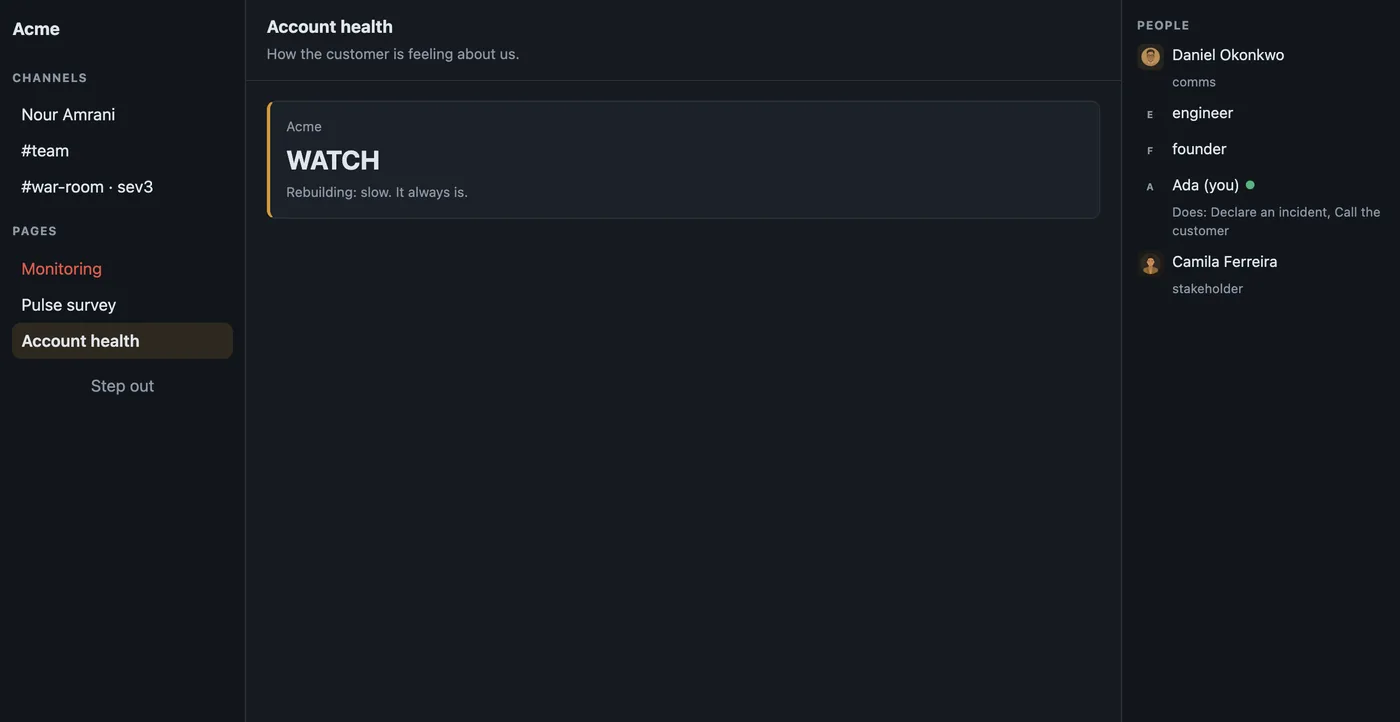
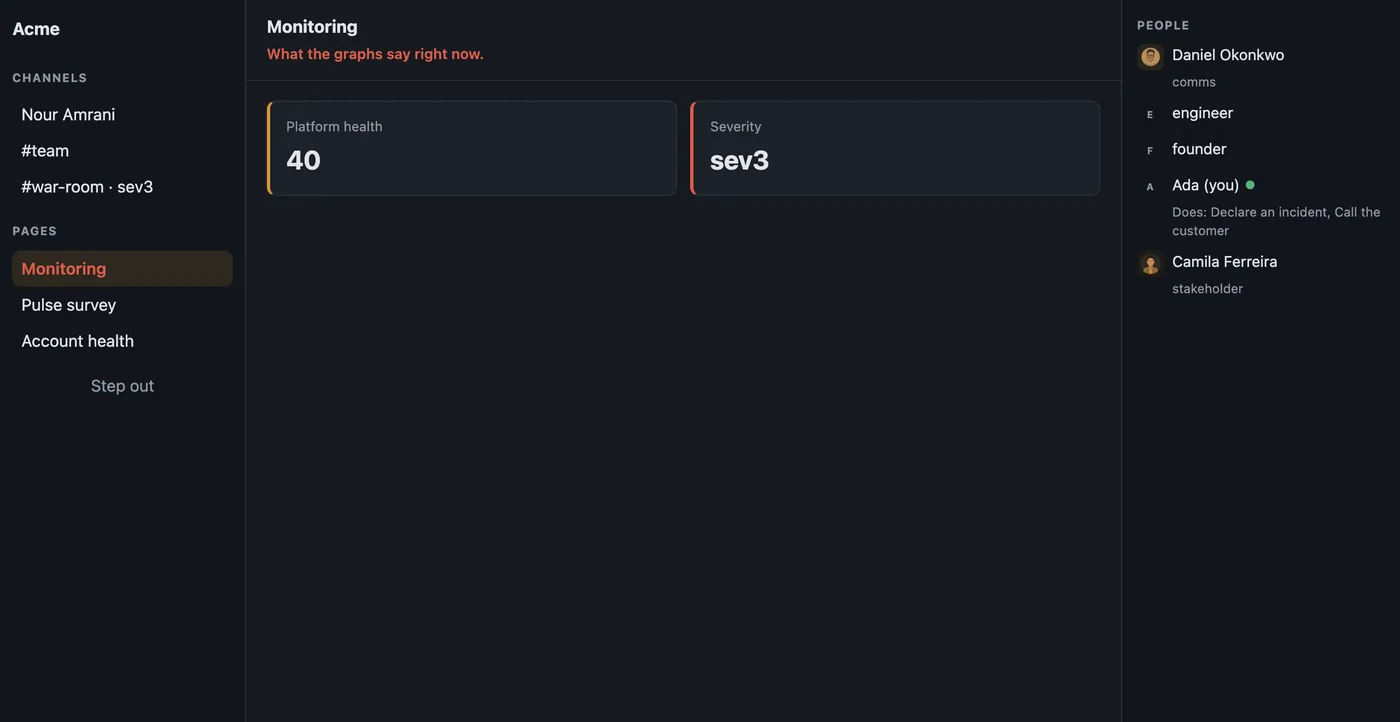
What one round looks like
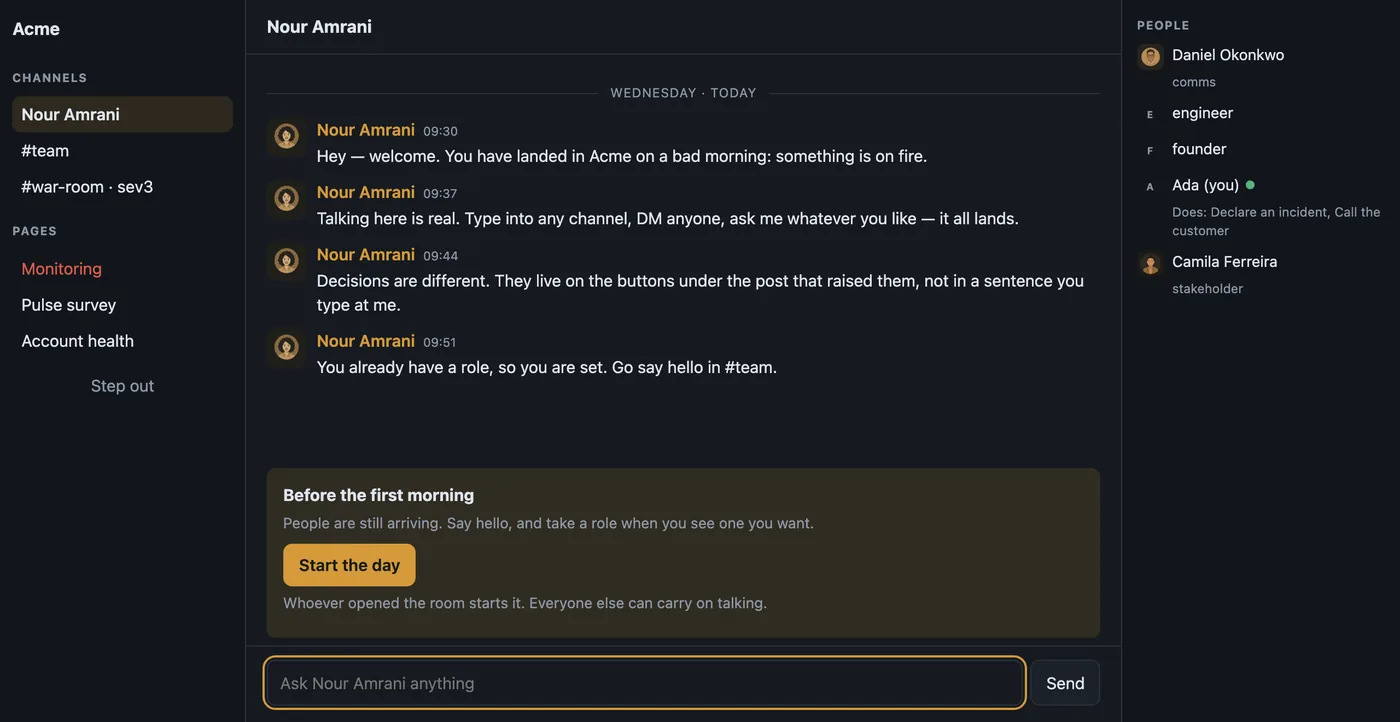
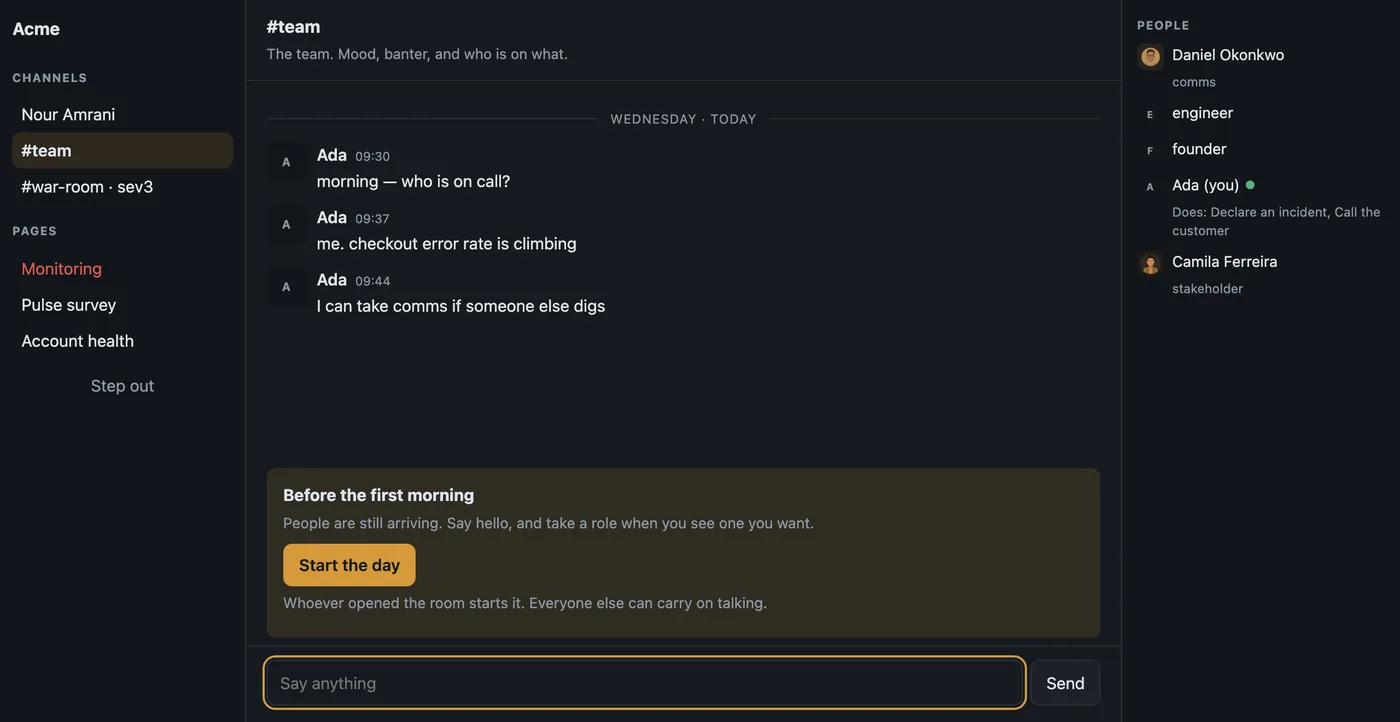
Take the Signal Triage scenario, in the middle of the stabilize phase.
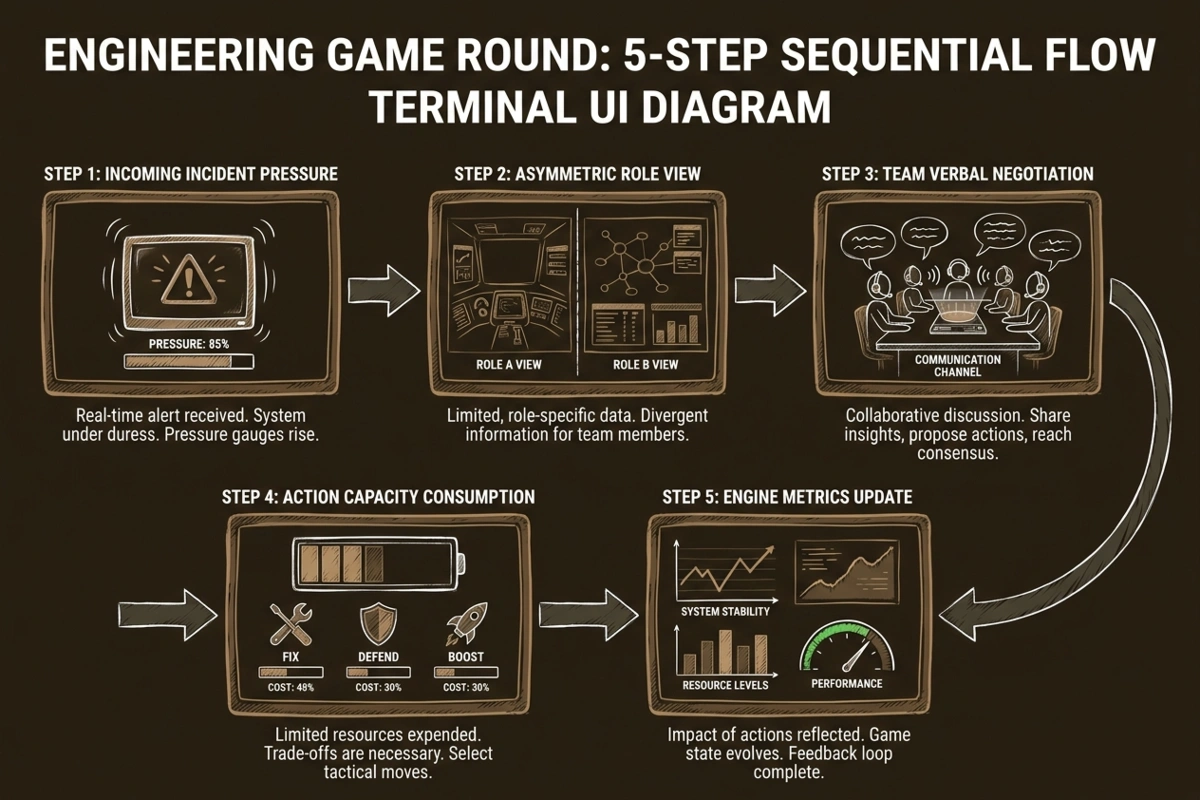
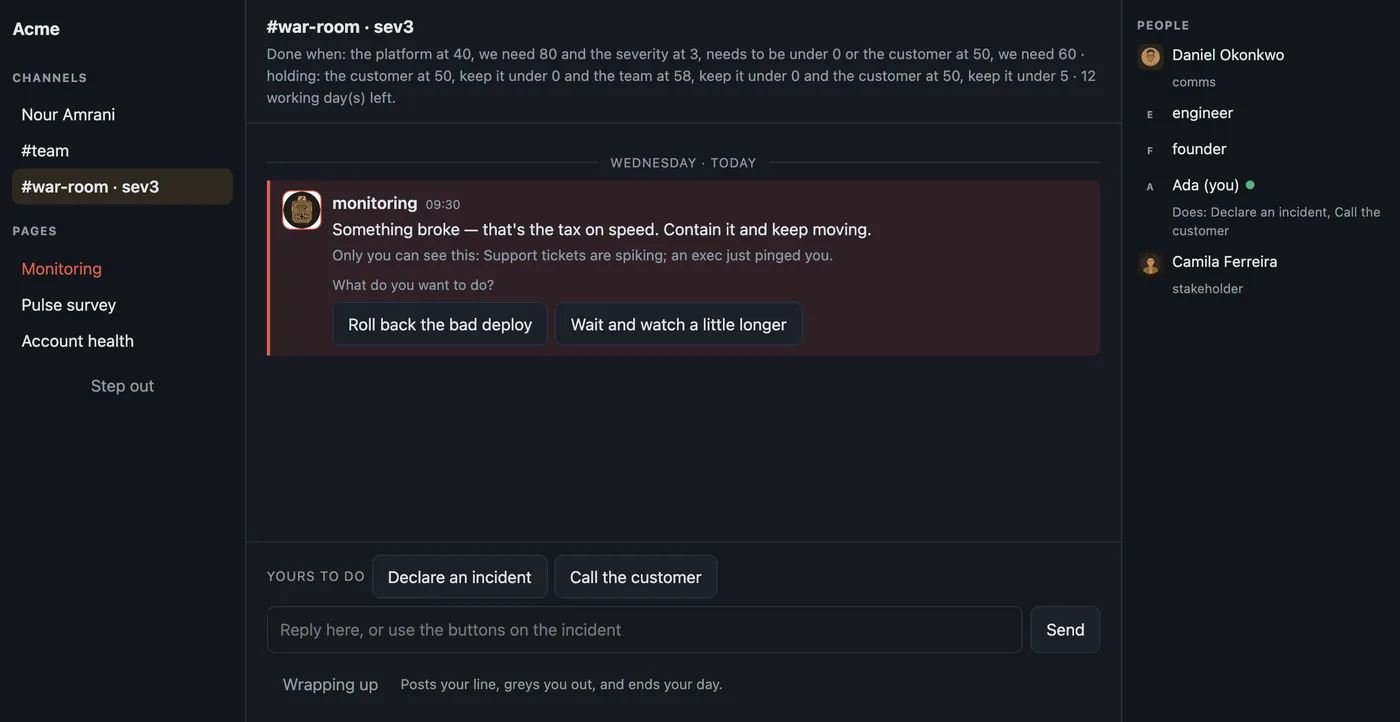
A pressure lands. A dependent service is failing too, and the blast radius is widening.
Everyone sees a different slice. The engineer sees the retry storm hammering the database. The incident lead sees support tickets spiking and a message from an exec. One round, different screens, and nobody holds the whole picture.
Then you talk. The lead can propose a rollback, but only the engineer can perform one: the lead simply does not have that verb in their power set. The agreement has to happen out loud.
Intents go to the server. Each seat has limited capacity per round, and some of it is already committed to work started earlier. Pulling someone off their task to fight the fire is itself a decision, and it costs something too.
The engine resolves. The rollback gives stability +25, quality −6 and morale −6: the system stops bleeding, and a week of somebody’s work goes back in the box. The meters are shared, so one person’s compromise reprices everyone else’s options.
Then the next round. The deadline clock always ticks, unresolved events compound, and a decision that runs past its due round resolves itself — never in your favour.
Why this is not a quiz
No round has a dominant option. That is not an aspiration, it is a content rule: the build fails on a card where one option is strictly better on the scored meters. An obvious answer here is a bug.
Consequences compound. Some effects are fused with a delay and telegraphed in advance, so the cheap moment to prevent a problem passes before the problem shows up. Debt taken in round three presents its bill in round nine.
Inaction is a move. Without input the world drifts down rather than holding still. Watching the meters is not a way to save resources.
The session ends in a retro. Not a grade and not a lecture on what you should have done, but an account of what happened: the chain of your decisions, the questions you deferred three standups in a row, and what all of it cost.
Next
- How it works — seats, rounds, phases, policies, meters and the retro.
- Scenarios — the five packaged scenarios and what each one exercises.
- Play — how to create a game, invite people, and play through a scenario.
- Changelog — what has changed since launch.